
Seated overnight
Reclining seats in an open saloon. There is no bunk, little storage by your knees, and almost no screen from neighbours. It is the cheapest way to stay on the move, and the hardest place to change clothes or lie flat.
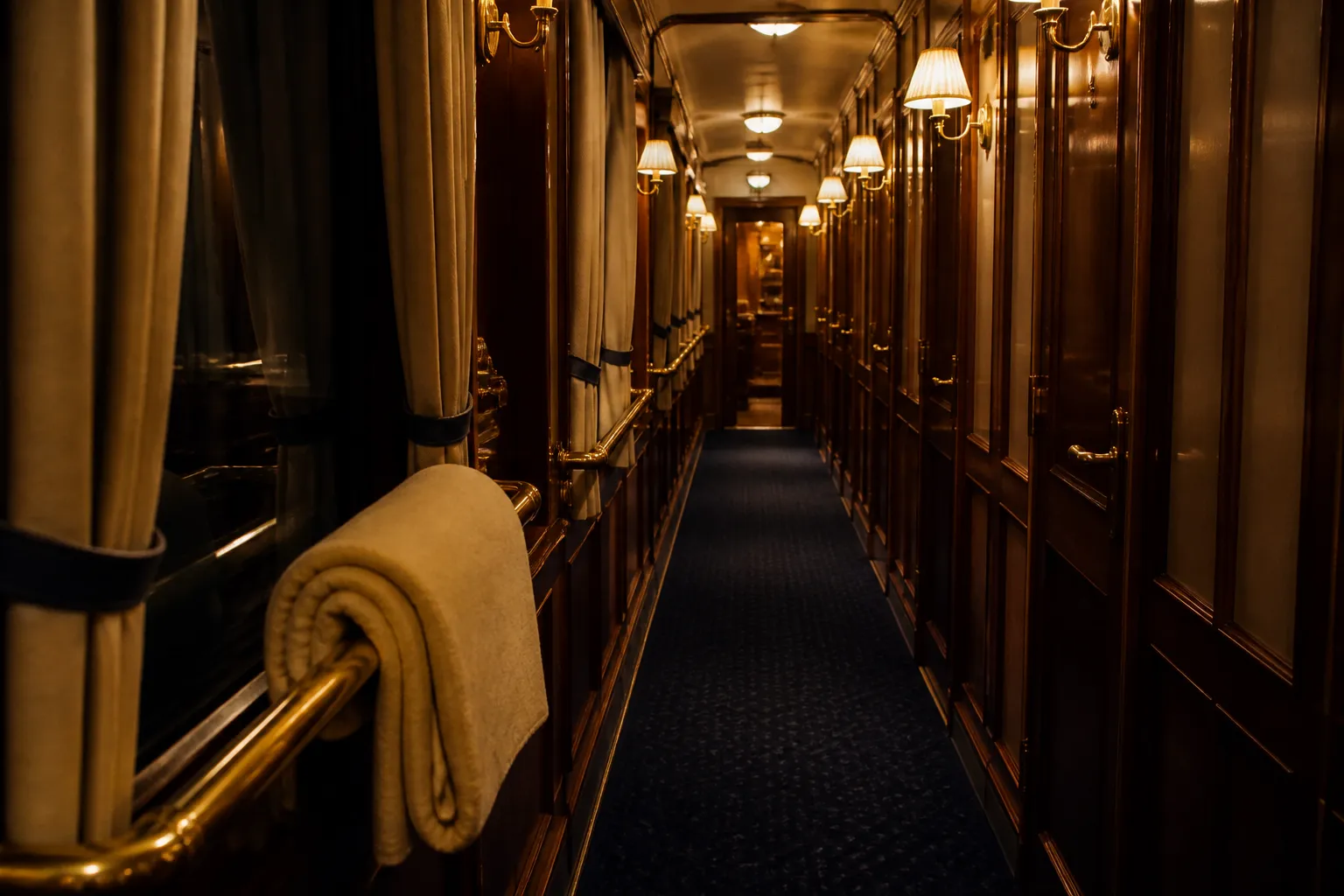
A sleeping car is not a moving hotel. It is a shared room with a timetable.
We treat the overnight ride as its own stretch of the journey, not a blank space between two stations. Regular passengers already know the order of that night and rarely say it out loud. We write it down: what happens in the first half hour, how berths, light, and the table are shared, what the car usually issues, and why you keep your own watch on arrival.
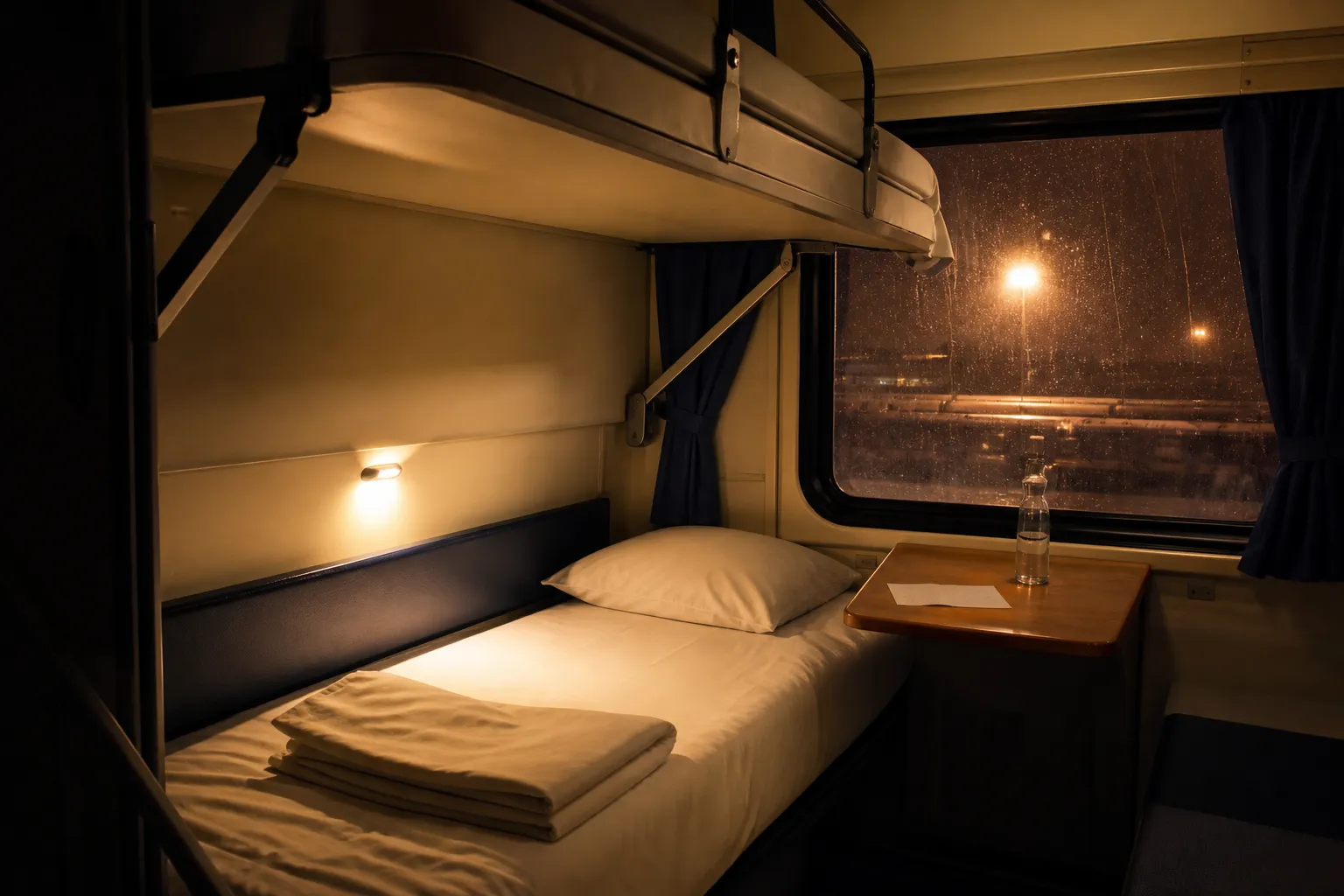
Daytime travel is public and brief. People stand, buy tickets, and move on. After dark, the same corridor becomes a room: shoes come off, bags claim a corner, and someone has to decide whether the overhead lamp stays on. That is not folklore. It is the ordinary work of sharing a few square metres with strangers you did not choose.
For a route, that night does two useful jobs. It carries you while you would otherwise pay for a bed and a transfer, and it shows how a place handles closeness: who offers the lower berth to an older passenger, how loudly people speak after the attendant dimmed the aisle, and what is considered a fair request. Those details rarely appear in station halls.
We do not claim the ride is restful. Cars run warm, couplings jerk, people snore, and platform lights flood the curtains at intermediate stops. The value is practical. If you know that this stretch is part of the trip, you stop treating it as lost time and start preparing for it with the same care you give to the first hotel night.
The point is not to romanticise the bunk. The point is to notice the house rules of the car, because those rules decide whether the people around you can sleep at all.
Names on tickets vary, but the body of the car usually falls into one of four patterns. Choosing among them is less about luxury than about how much privacy you can handle, and how much you are willing to share air, light, and the washroom queue.
Reclining seats in an open saloon. There is no bunk, little storage by your knees, and almost no screen from neighbours. It is the cheapest way to stay on the move, and the hardest place to change clothes or lie flat.
Stacked bunks along a shared aisle, often with a curtain rather than a door. You hear every zipper and every late boarding. The trade is simple: more people, less privacy, and a very clear view of how the car actually lives after ten.
A small room with a sliding door, two or four berths, a table, and a light you can negotiate. The door helps. It does not erase the shared corridor, the washroom, or the need to agree on the window latch with the people inside.
One berth behind a door, sometimes with a tiny washbasin. You still walk the same aisle to the toilet, and you still hear the couplings. What you buy is the right not to discuss the lamp with a stranger at midnight.
In every layout you share a corridor, a washroom, and an arrival you do not fully control. Bags still need a place that will not block the aisle. Phones still leak light. Someone still has to decide when talk stops. Those common parts are why a first-timer can learn one sequence and reuse it, even when the ticket says a different class.
These figures come from the team’s own notebooks: rides taken, interiors compared, packing lists revised after a night that went poorly, and years of boarding sleeping cars as ordinary passengers rather than as reviewers with a camera crew.
Each entry notes the car type, boarding crush, what linen was issued, and whether the attendant woke the aisle before the ticketed stop.
Open berths, compartments, seated overnight saloons, and single rooms, drawn from rides rather than from brochure photographs.
Short lists shaped after nights when a full suitcase had to be opened in the aisle, or when the car issued less than the ticket implied.
Three consultants boarding night cars on working trips, not as a staged experiment, and turning those notes into briefings.
The difficult part for a first night is not the motion of the train. It is the sequence nobody prints on the ticket: claim the berth, settle the light, park the bag, and keep a night kit within reach. That order decides whether you will rummage at one in the morning.
Confirm upper or lower as soon as you are at the berth. Put the large bag where the car expects it — under, overhead, or in the vestibule rack — so later arrivals are not climbing over it.
These three objects serve everyone in the bay. A short, plain question in the first minutes is easier than a whispered argument after the attendant has already dimmed the corridor.
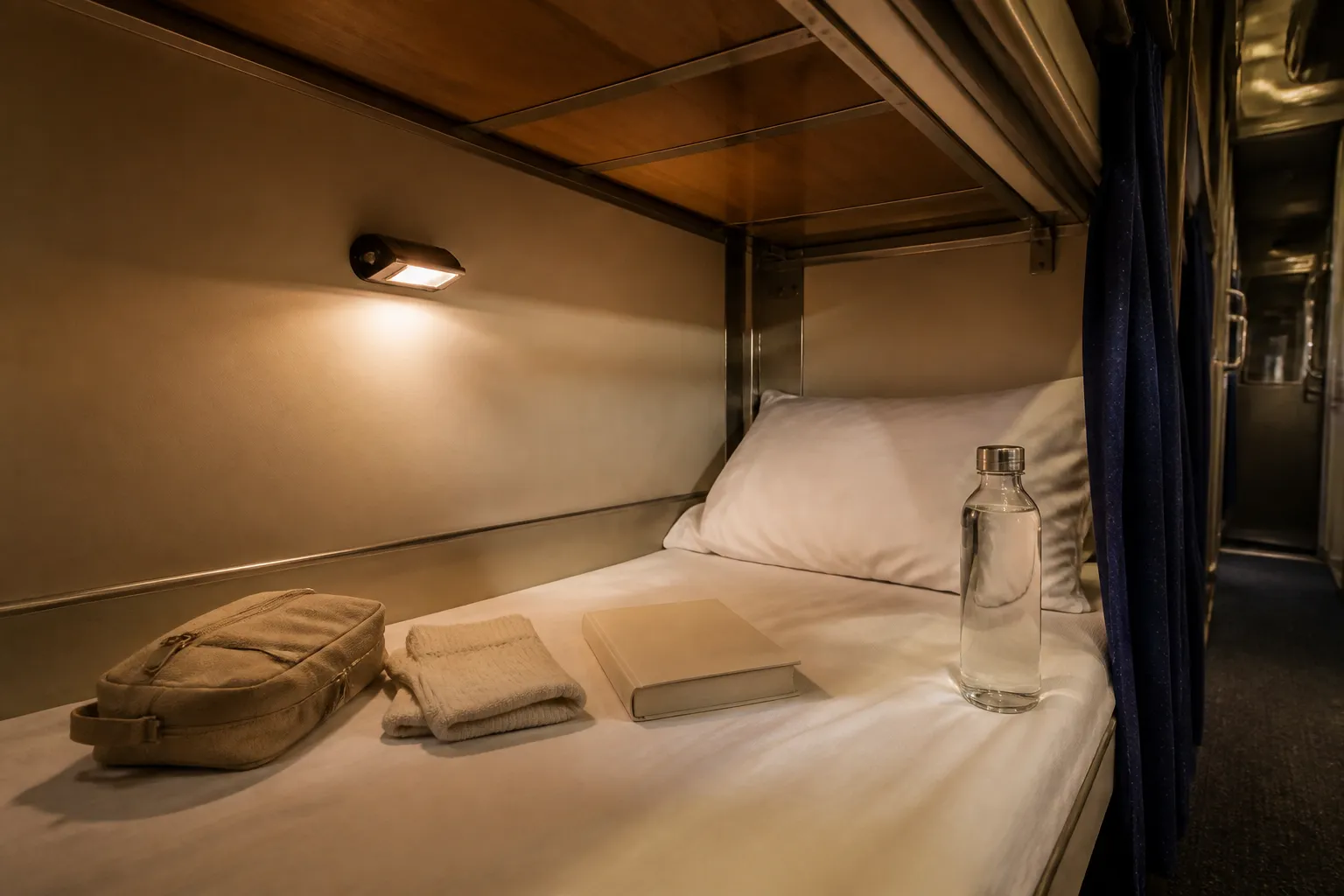
Toothbrush, socks, a layer, earplugs, and whatever you need for the washroom should live in one small bag. Cars often issue a pillow and a thin blanket; they rarely issue a complete kit.
Night stops, ticket checks, and loudspeaker calls do not follow a guest’s sleep. Regulars set an alarm and do not wait for someone else to knock. Early arrivals mean a station that may still be half closed, so the morning needs a plan before you board.
Consultations are personal because the notes are personal. Each profile below is the person you can ask to walk through a specific carriage type, a packing list, or a first-morning plan.

Overnight route researcher
Certificate in Passenger Rail Briefing, Northline Travel Institute
Elena records how cars are actually boarded: where bags go, when the attendant passes, and which layouts punish a first-timer. She turns those notes into route briefings before a ticket is bought.

Sleeping-car logistics advisor
Associate, Overnight Cabin Planning
Marcus compares what a ticket promises with what a berth usually includes. He helps clients ask the right questions about linen, power, and whether a so-called sleeper is only a reclining seat.

Cabin etiquette and packing specialist
Night Travel Field Certificate, Berthcraft Studio
Priya works on the social half of the car: when talk is welcome, how to use a phone after lights-out, and how to pack so a washroom visit does not mean unpacking the whole bag in the aisle.
If you want a personal walk-through of a carriage type, a packing list, or a first-morning plan, write to the desk. We answer with the same notes we use on our own rides: what to confirm before you buy the berth, and what to do in the first minutes on board.
Request a Consultationhalmyroly provides knowledge about overnight trains and advisory conversations for this part of a route. We do not run the railway, sell berths, or promise sleep. We explain the shared room you are about to enter, and we stay honest about heat, noise, and early arrivals.
halmyroly provides knowledge about overnight train travel and offers consultations on this part of a route. The materials on this site are written to help you understand sleeping cars, boarding order, and ordinary cabin manners. They describe our observations and our advisory work. They are not a substitute for the rules of the railway you travel with, and they are not a booking service.
We do not promise rest, quiet, or any effect on your health. Motion, heat, interrupted sleep, and crowded washrooms are common on night cars. Questions about wellbeing, motion sensitivity, or whether a night journey is appropriate for you belong with qualified specialists, not with a travel desk.
Conditions change between rides. A carriage may be refitted, a station building may close overnight, an attendant’s pass may follow a different pattern, and what is issued with a berth can differ from the last time the same train ran. Confirm details close to departure with the operator, and treat our notes as a starting brief rather than a guarantee of the car you will find.
Any decision you make — to board, to choose a berth type, to pack a certain way, or to arrive at a given hour — is yours. halmyroly is not responsible for the outcome of independent choices, missed connections, discomfort on board, or changes made by railways and stations after you have read these pages.