Why the First Conversation Matters
In a four-berth compartment, personal space shrinks to a shelf and a curtain. Everyone boards with habits formed in bedrooms they do not share: one person reads with a bright lamp until midnight, another needs darkness by ten. Without a short exchange in the first fifteen minutes, these habits collide at the worst possible time — when someone is already half asleep and less willing to negotiate.
The conversation does not need to be long. Three or four sentences at most. It is not about setting rules — it is about surfacing preferences early so that compromises happen before tempers are tested by fatigue.
The Berth: Upper Versus Lower
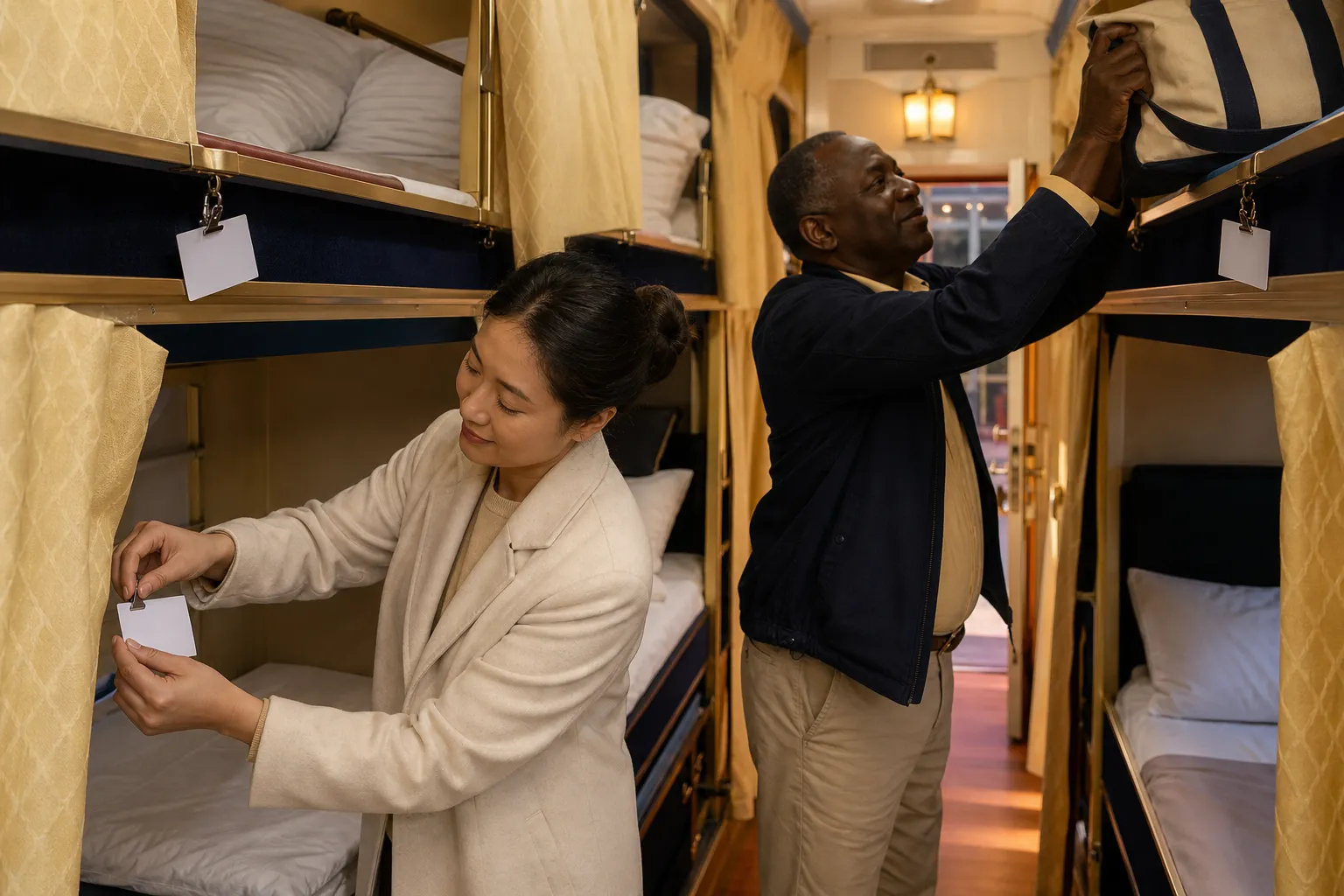
On most sleeper cars, berth numbers are assigned at booking. But in practice, people swap. The lower berth is easier to access and doubles as a seat during the evening. The upper berth offers more privacy and is less disturbed by corridor traffic. Knowing what your compartment-mates prefer can prevent the awkward scene where two people climb toward the same shelf.
- If you booked a lower berth but prefer upper, say so immediately — someone else may want to trade
- Ask directly: "Are you comfortable with your berth number, or would you like to swap?"
- If everyone keeps their assigned berth, confirm who is where so bags end up on the right shelf
- Avoid climbing to an upper berth before folding away anything left on the lower one — it signals disregard
When Assigned Berths Are Not Marked
On older carriages, berth cards may be missing or faded. In that case, the first person to arrive does not automatically claim the lower bunk. Wait for all passengers to board, then sort positions together. A thirty-second discussion prevents a silent grudge that lasts all night.
The Lamp: Reading Light After Dark
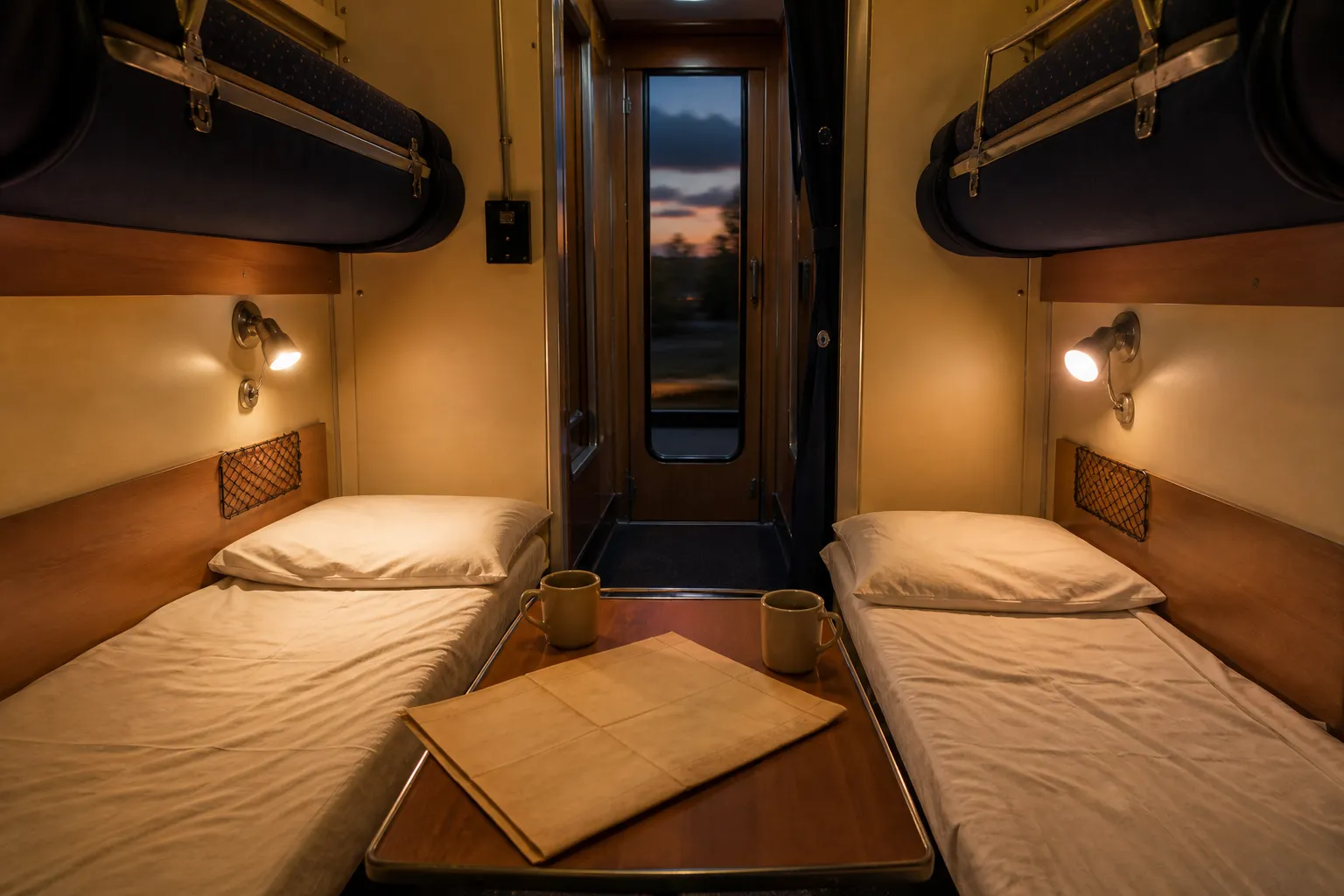
Each berth usually has its own reading lamp, angled to illuminate one pillow without flooding the whole compartment. In theory this solves the problem. In practice, a switched-on lamp at midnight still produces enough glow to disturb a light sleeper on the opposite bunk, particularly if the shade is cracked or the bulb is brighter than intended.
- Mention your reading habits early: "I usually read for twenty minutes before sleep — is that all right with you?"
- Ask whether anyone needs full darkness immediately after the main light goes off
- If your lamp leaks light sideways, angle it toward the wall rather than the corridor
- Offer a specific time: "I will switch off by eleven" is more reassuring than "I will not be long"
The lamp is not the problem — the absence of a stated intention is. A person can tolerate twenty minutes of soft light if they know it has an end point. They cannot tolerate uncertainty.
The Table: Shared Surface, Unspoken Rules
The fold-down table between lower berths is small — barely enough for two cups and a phone. It belongs to no one, which means it belongs to whoever fills it first. That creates friction when one passenger spreads a meal across it while another wants to set down a book and a water bottle.
The easiest fix is to ask before placing anything: "Do you mind if I use half the table for dinner?" This sounds overly polite for a tiny shelf, but politeness is exactly what keeps a shared box from feeling like a contested one.
Practical Table Agreements
- Each person uses one half — left and right, or alternate time slots if both need the full surface
- Food wrappers and crumbs are cleared immediately, not left for the next person to move
- Heavy items (water bottles, books) go against the wall side where a sudden brake will not send them flying
- After lights-out, only essentials remain on the table: a phone, a water bottle, perhaps a tissue pack
Tone and Timing
These conversations work best during the settling-in period — after bags are stowed, before anyone has changed into sleep clothes. The tone should be casual and brief. You are not drafting a contract; you are exchanging preferences. A smile and a direct question go further than a passive hint that the other person may not catch.
If a companion is clearly not interested in talking — headphones on, curtain half-drawn — respect that. Write your preferences on a small piece of paper and leave it visible: "I plan to switch my lamp off by 23:00. Let me know if you need anything adjusted." It achieves the same result without requiring eye contact.
When Agreements Break Down
Sometimes a compartment-mate agrees to switch off at eleven and then reads until one. Confrontation at that hour rarely ends well. A gentle reminder — "Excuse me, would you mind the lamp?" — delivered in a neutral tone usually works. If it does not, earplugs and an eye mask are cheaper than an argument. Some nights cannot be negotiated, only endured. Accept that early and save your energy for the morning.
The goal is not perfection — it is reducing the number of silent grievances from five to one. A single brief conversation at the start of the journey removes most of the friction that turns a shared night into a miserable one.