Minute 0 to 5: Claim Space Without Blocking Flow
In the first minutes after you step into a sleeper car, everyone is trying to do the same thing: identify a berth, move a bag, and breathe after the platform sprint. The aisle is narrow, and a single open suitcase can reduce it to a queue. Your first job is not unpacking. Your first job is parking yourself and your luggage in a way that keeps movement possible for others.
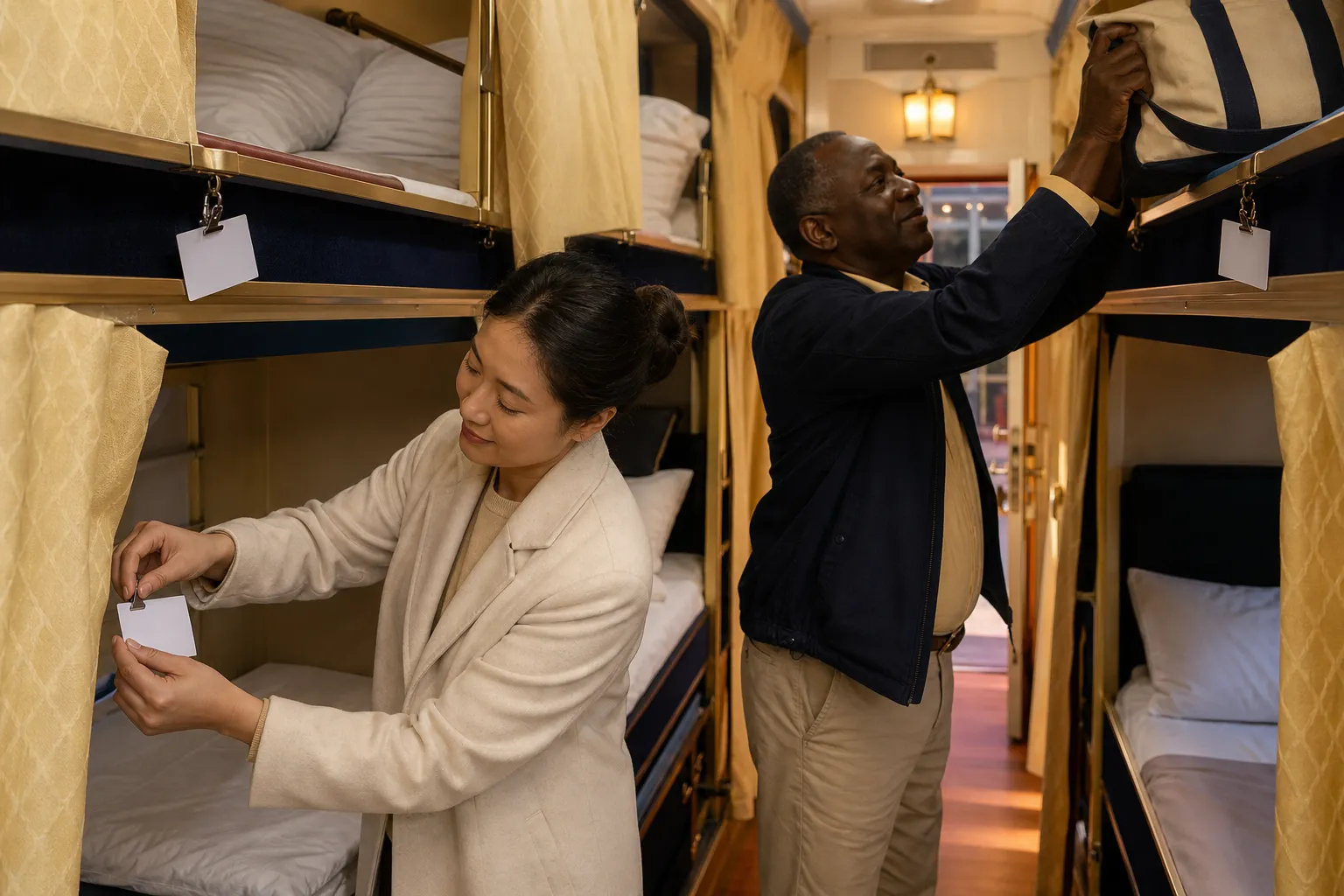
Read berth numbers before lifting anything overhead. Many delays begin when someone stores a heavy case over the wrong berth and must pull it down again while three passengers wait to pass. If your berth card is difficult to see, ask a nearby passenger or attendant immediately instead of guessing.
- Step fully into your berth zone before adjusting straps or clothing
- Stand your main bag upright against the wall for a moment rather than opening it in the aisle
- Keep one hand free so you can let others pass without shuffling luggage twice
- Use short, direct phrases: “Passing through,” “Is this berth 18?” and “Thanks”
Minute 5 to 10: Stow Heavy Items First
Once you confirm your berth, move heavy bags to final storage before doing any personal setup. If you delay this step, you will likely need to move bags around people who are already seated, changing clothes, or making up beds. Heavy lifting later is both harder and more disruptive.
- Place the heaviest bag in its long-term location
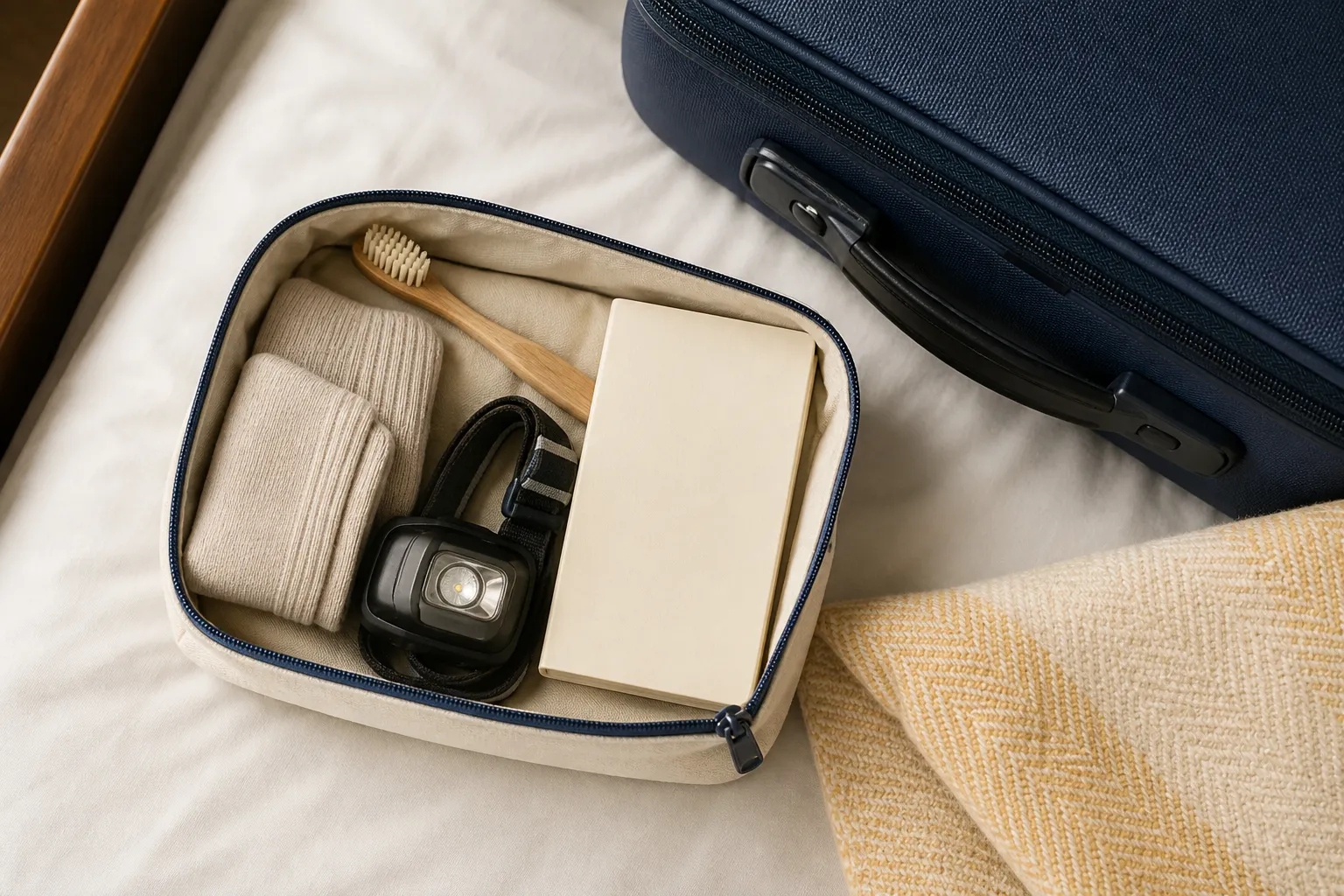
- Set a smaller “night access” pouch within easy reach
- Check that bag handles and straps are not hanging into the aisle
- Confirm that shoes are under your berth, not in the walkway
If the overhead rack is crowded, ask before shifting another passenger’s things. Even a polite move can feel invasive if done silently. A quick request prevents misunderstandings and keeps the tone cooperative.
Early order is not about etiquette performance. It is practical traffic management in a moving corridor with tired people and heavy objects.
Minute 10 to 15: Introduce Yourself and Align Basics
This is the best window for a simple greeting. Everyone is still alert, and small agreements are easy to make. If you wait until lights-out, basic questions about lamp use or berth swaps feel bigger than they are.
Keep introductions minimal: your first name, your berth number, and one practical preference. For example: “I’m Elena, upper berth, and I usually switch lights off early.” That sentence gives useful context without forcing a long conversation.
- Confirm whether anyone expects a berth swap request
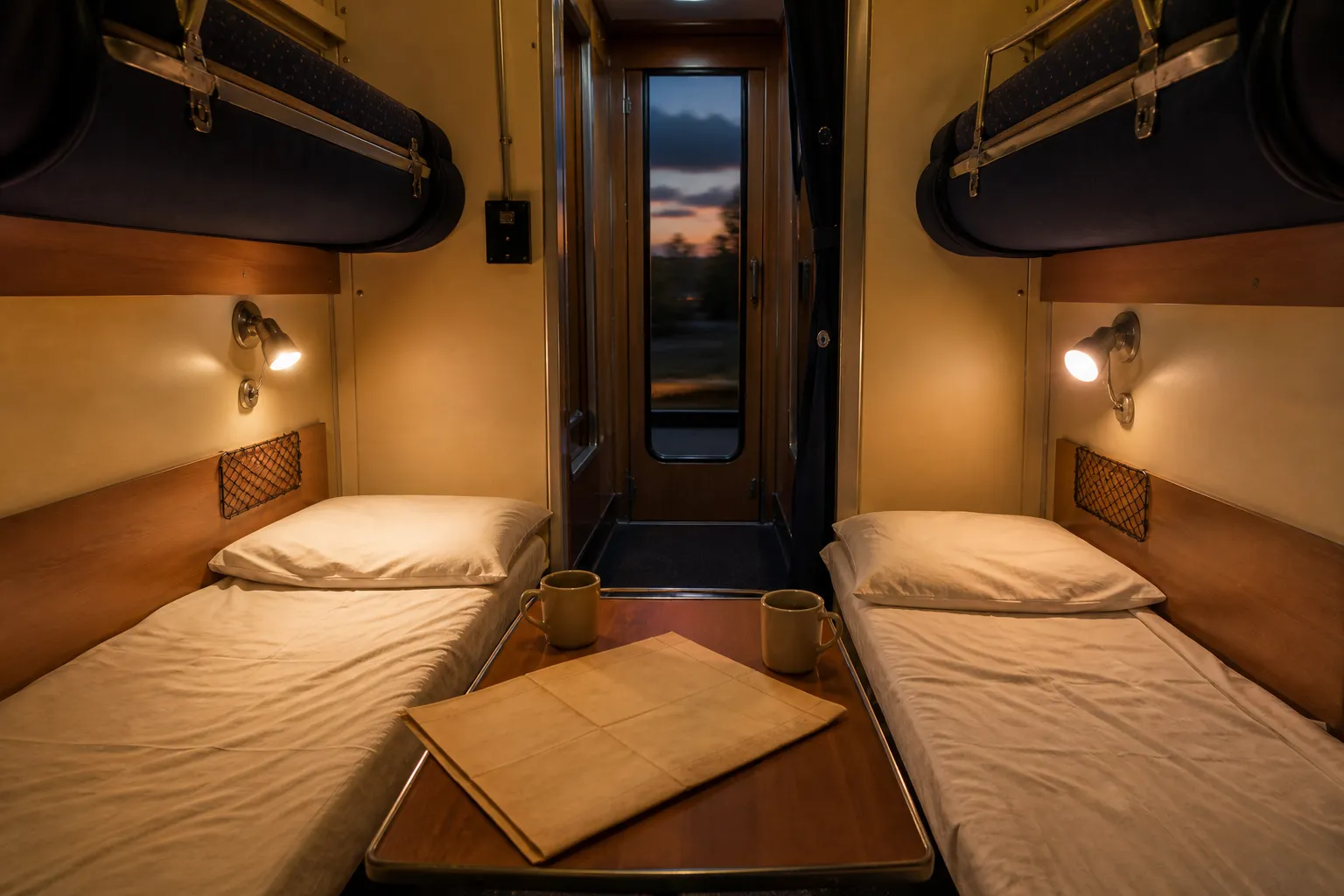
- Agree on when the main light should be turned off
- Clarify who needs access to the table first
- Identify if someone has mobility limits when climbing to an upper berth
Minute 15 to 20: Build a Stable Night Setup
After luggage and introductions, set up only what you need before the train settles into speed. Avoid full unpacking. The aim is to prepare for nighttime interruptions without turning the berth into a spread of loose items.
Keep water, phone, ticket, and a light layer close. Everything else can stay inside the main bag. If the train brakes suddenly, loose toiletries and cables become floor clutter that someone steps on in the dark.
- Put water where it cannot tip onto bedding
- Charge devices now if an outlet is available
- Keep your document pouch in one fixed pocket
- Store tomorrow’s first-use item near the berth edge
Minute 20 to 30: Reduce Noise and Friction
The final phase is quieting the compartment. Wrappers, hard suitcase latches, and repeated zipper pulls sound louder after departure, especially when windows and curtains are closed. Finishing these tasks early helps everyone settle faster.
If you need to reorganize something complicated, do it at a vestibule table if available, not in the sleeping aisle. This small move prevents repeated interruptions for people already trying to rest.
A Practical End-of-Half-Hour Check
- Your berth is identified and clear
- Your heavy luggage is fixed in place
- Your night essentials are reachable in one movement
- Core agreements on lights and table use are made
- The aisle near your berth is free of obstacles
That is enough. You do not need a perfect setup, only a stable one. When this first half hour is handled well, the rest of the night usually becomes ordinary rather than tense, and ordinary is exactly what most overnight passengers hope for.